TOUBKAL
Toubkal in winter: what a serious agency requires
Published 10 September 2026 · Updated 10 September 2026
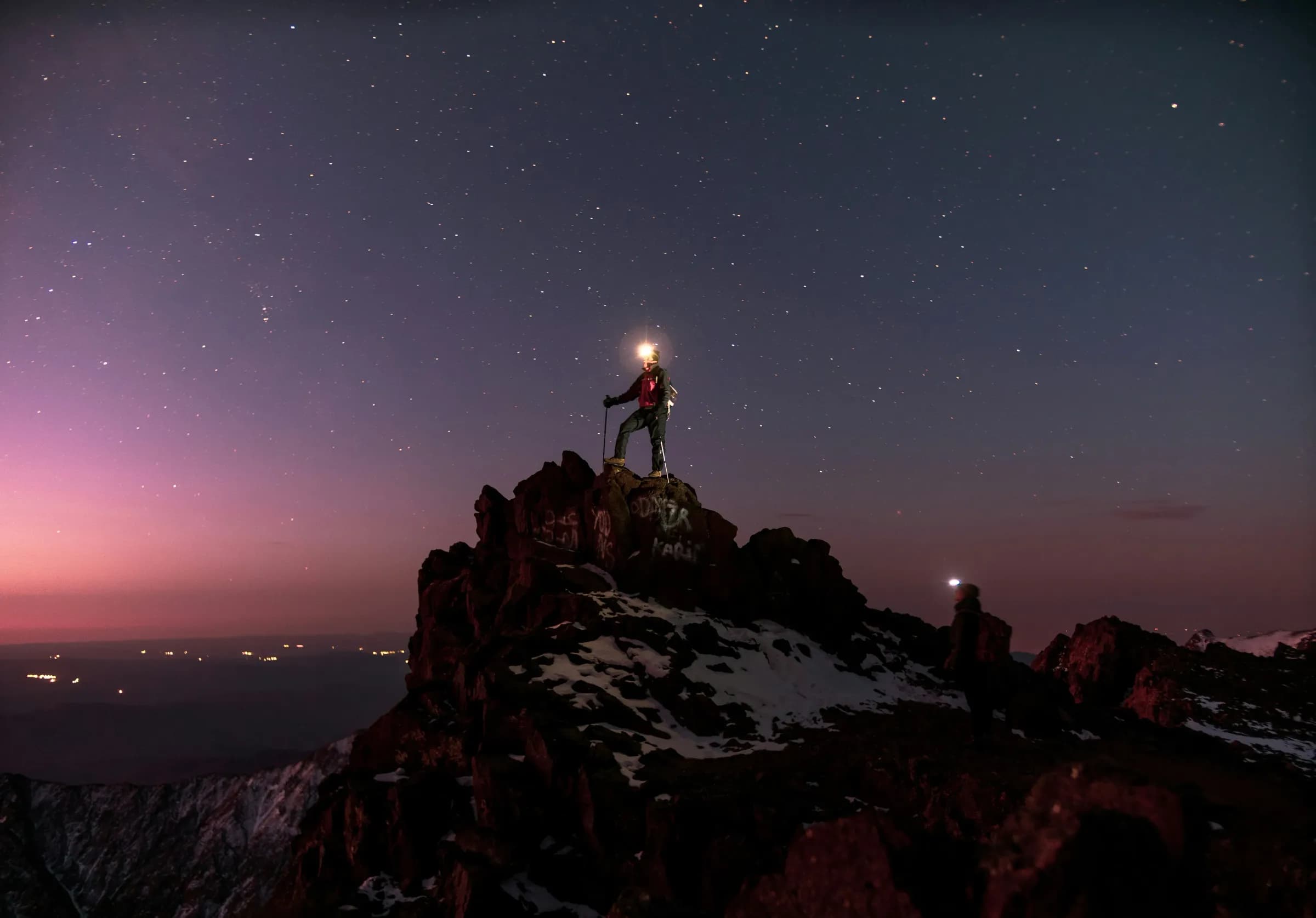
From December to March, Toubkal changes nature. The slopes below the pass load with hard snow, the refuge runs half-empty, and summit morning starts by headtorch at −10 °C. This is no longer a hike.
What actually changes
- The ground: hard snow, then ice above 3,600 m. A slip does not stop itself.
- The kit: crampons fitted to YOUR boots, an ice axe, a −10 °C bag. The guide checks in Imlil, before leaving.
- The guiding: winter-qualified, smaller groups, a real weather margin.
If an agency accepts your February without one question about your boots, change agency.
What a serious agency will ask you
- Your real crampon experience — not the CV version.
- Your boots (rigid or not). This is usually where it's decided.
- One flexible day for the summit: the weather window decides, not the itinerary.
The winter group cap
Six travellers per guide on a winter ascent. Every listed agency signs that cap, and it is not negotiated to fit one more friend in. A group run over the cap gets an agency removed: how we select.
And if the answer is no?
A winter refusal is information, not failure. The same agencies run superb alternatives in the same weeks: the Sahara is in prime season, the Anti-Atlas in almond blossom.
Guided ascents: Toubkal ascent from Imlil. The month-by-month verdict: best time to climb Toubkal.