Trekking in Morocco in February: Almond Blossom & Desert Treks
Where to trek in Morocco in February: almond blossom around Tafraout, ideal desert temperatures, a snowbound High Atlas. Treks run by local agencies — book direct, 0% commission.
- Trips
- 11
- Length
- 4 to 17 days
- Max. altitude
- 2,601 m
Where February works, and where it doesn't
The full guide: when to go- SaharaIdealIdeal daytime temperatures, cool but manageable nights, and empty dunes.3 treks this month
- Anti-AtlasIdealAlmond blossom around Tafraoute — one of the loveliest moments in the Moroccan year.7 treks this month
- ToubkalPossible with careDeep winter: the heaviest snowpack of the year and avalanche risk in the Toubkal couloirs. For walkers with alpine experience only.No treks this month
- RifPossible with careStill very wet, with snow possible on the Talassemtane ridges.No treks this month
- M'GounWe would tell you to waitPeak snow cover across the massif and high routes closed. We would tell you to wait for spring.Come back from June to September
11 treks for February
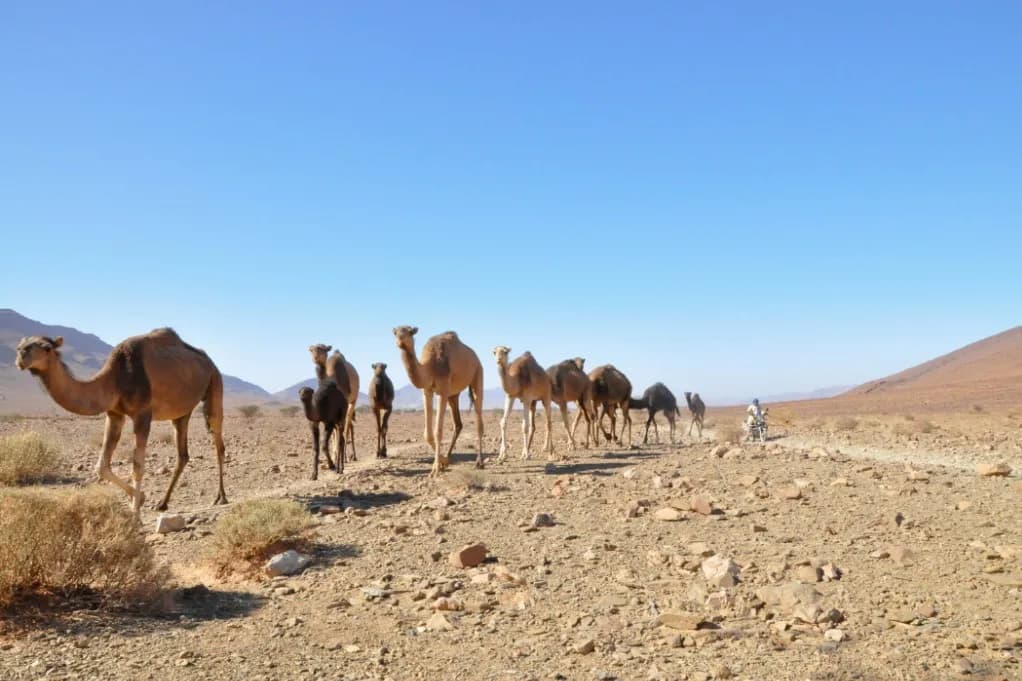
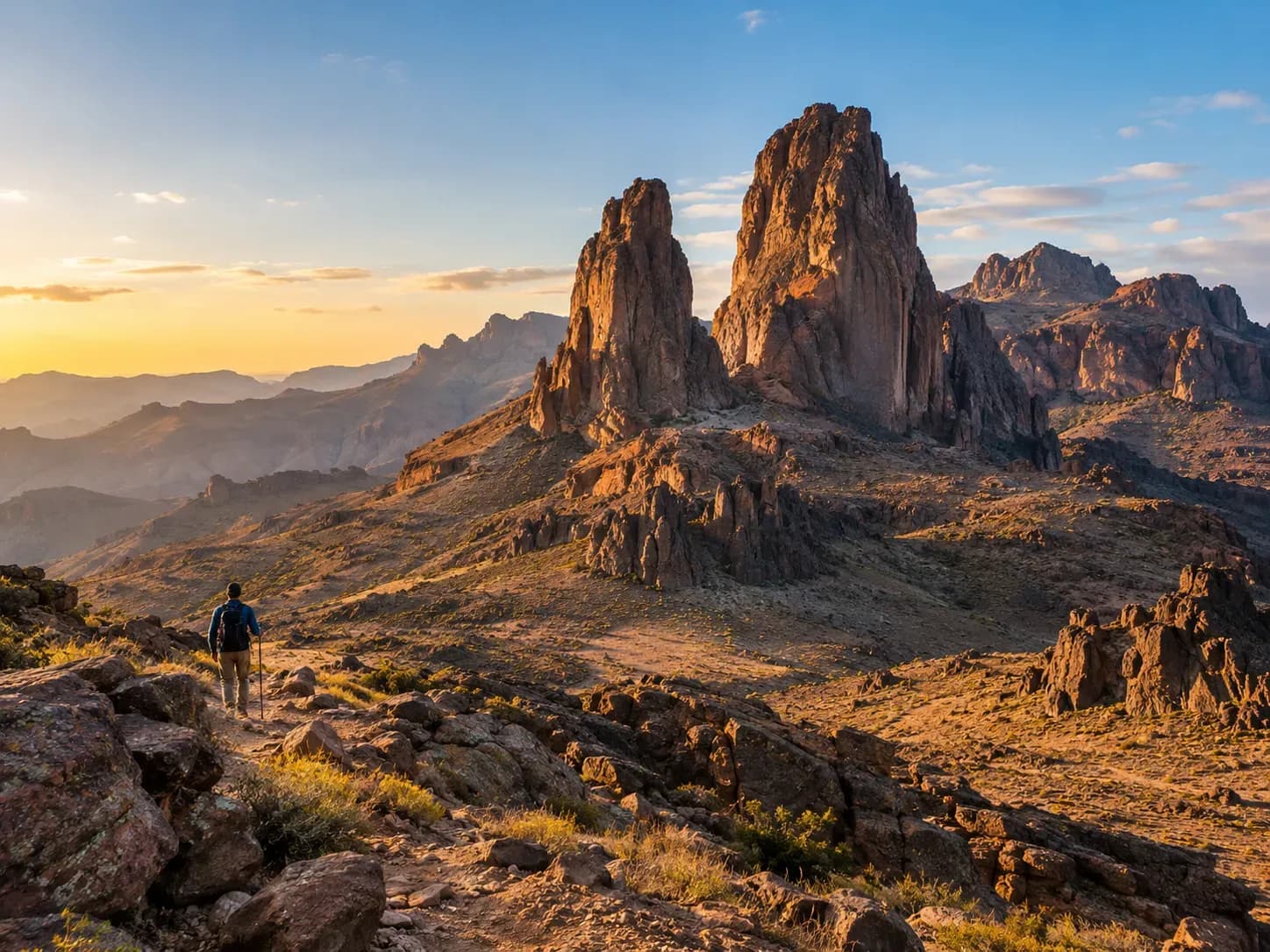
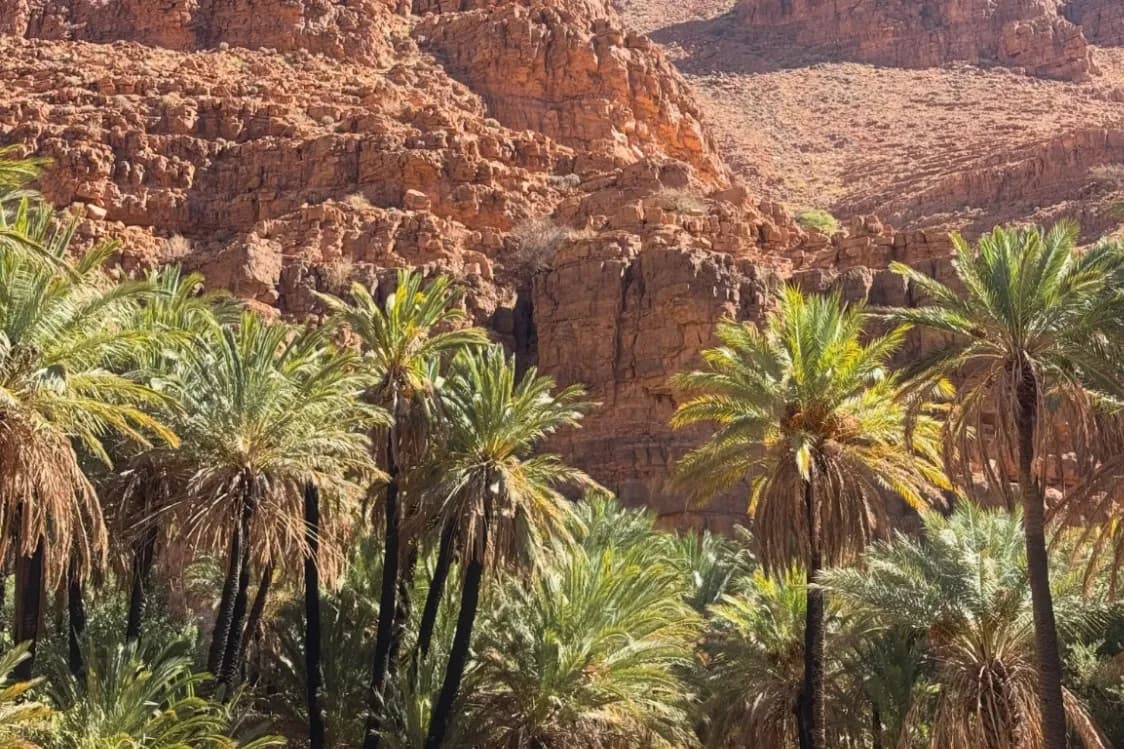
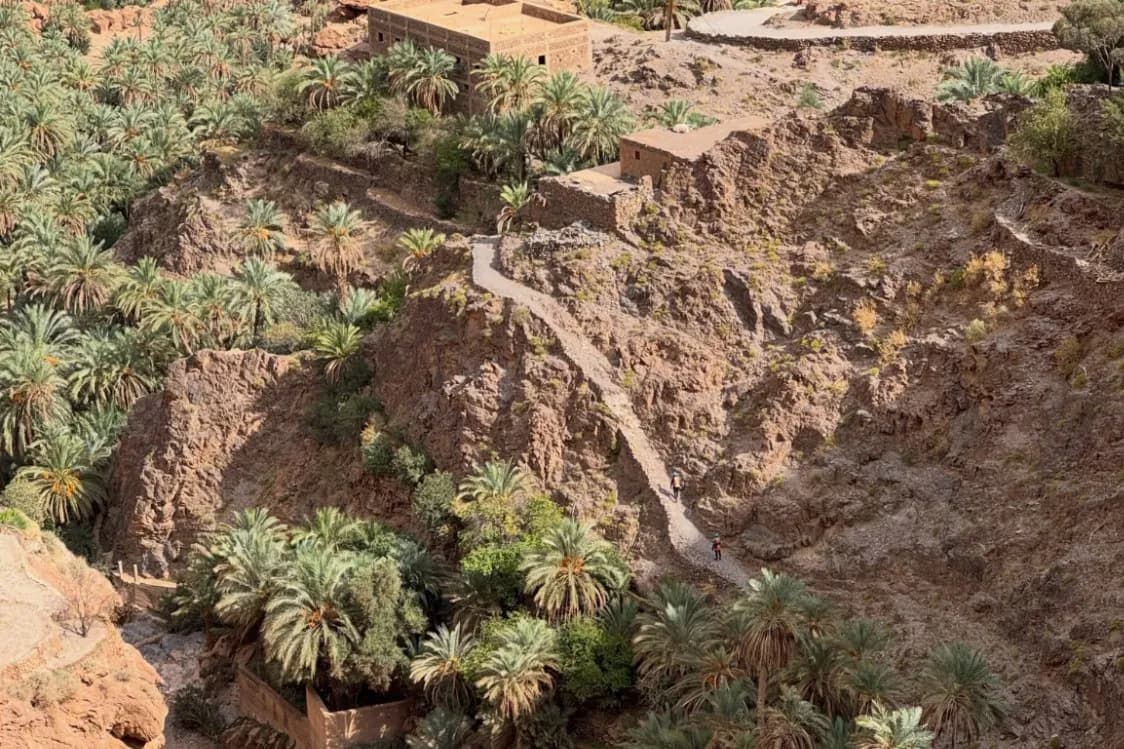
February, in practice.
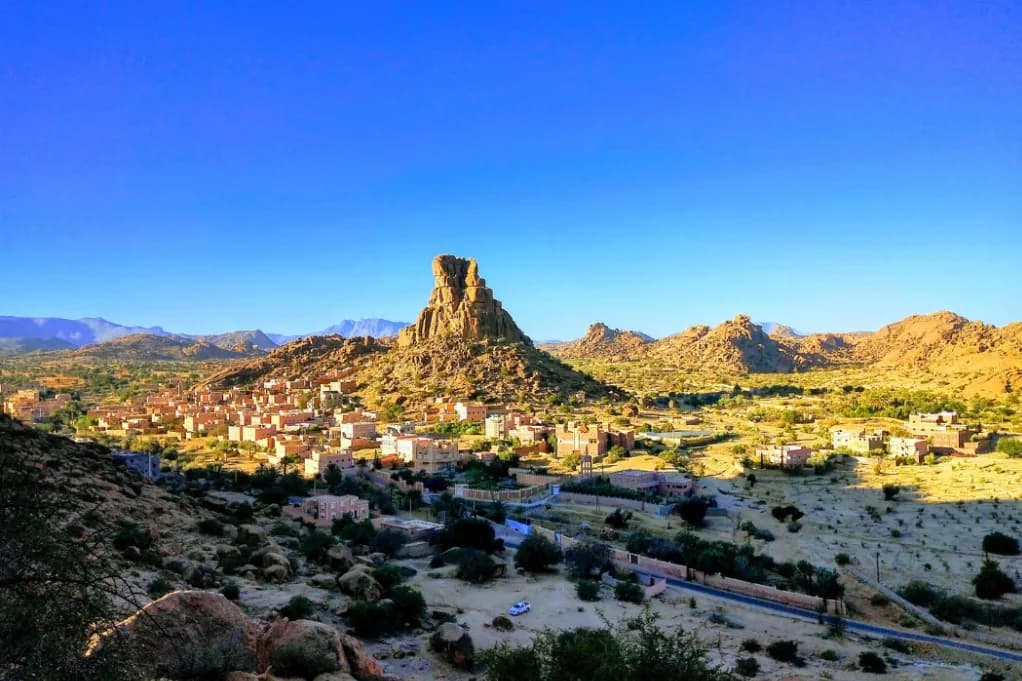
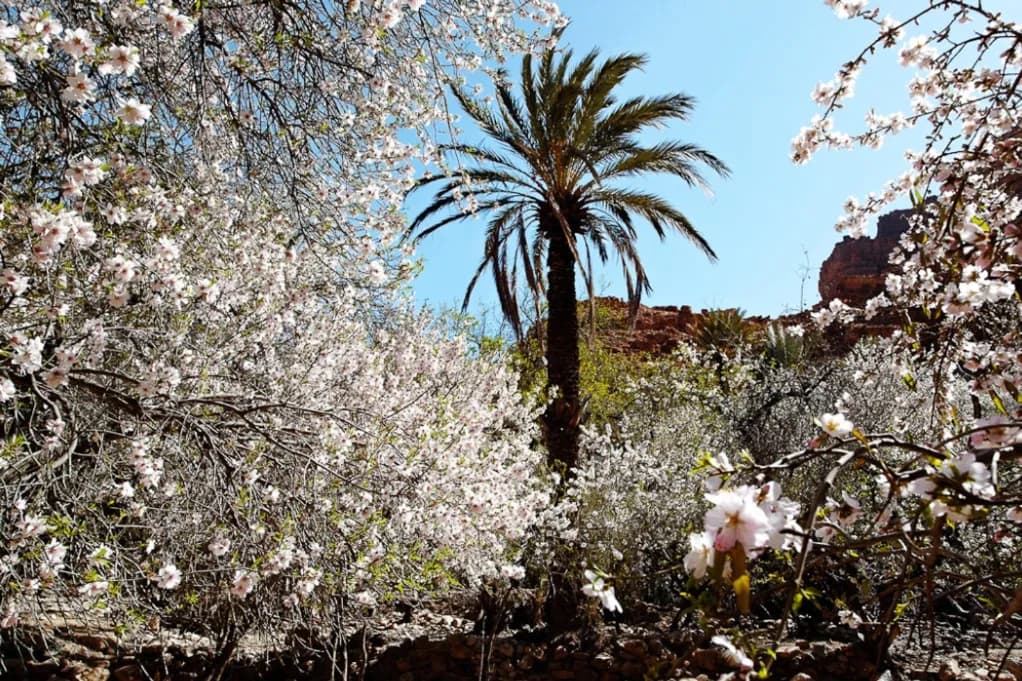
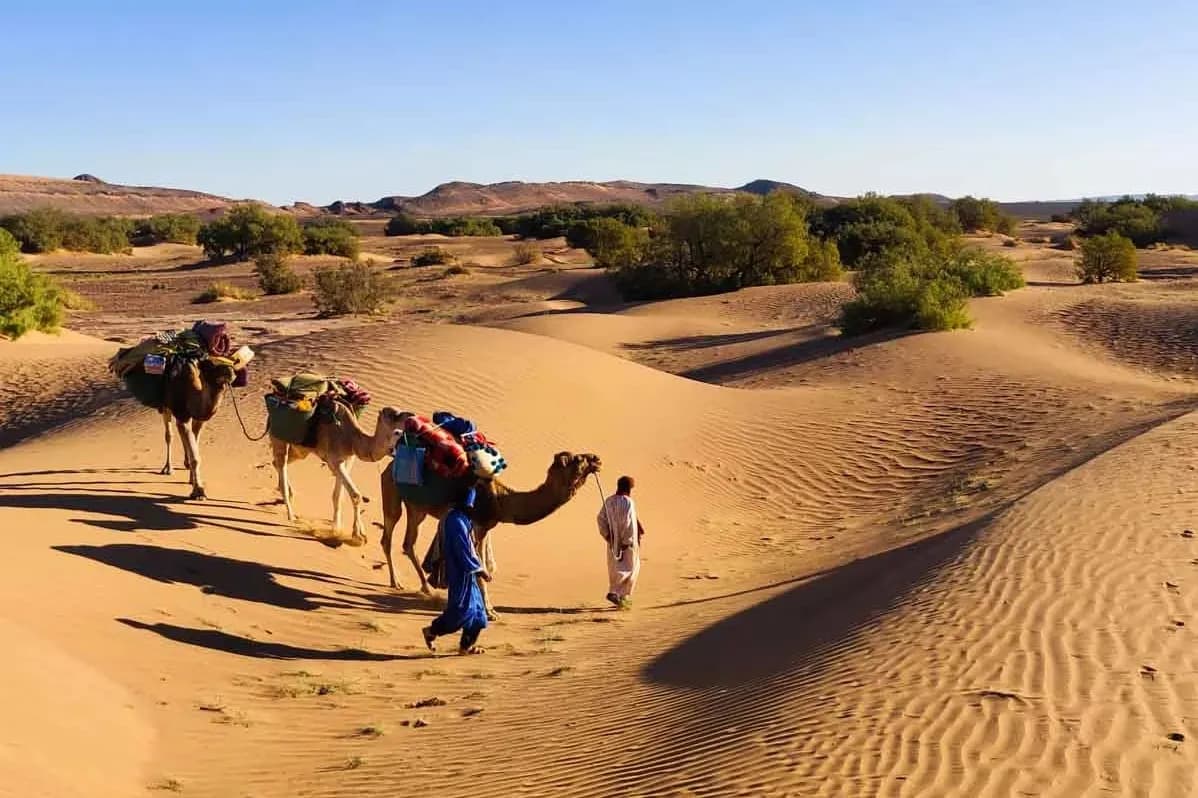
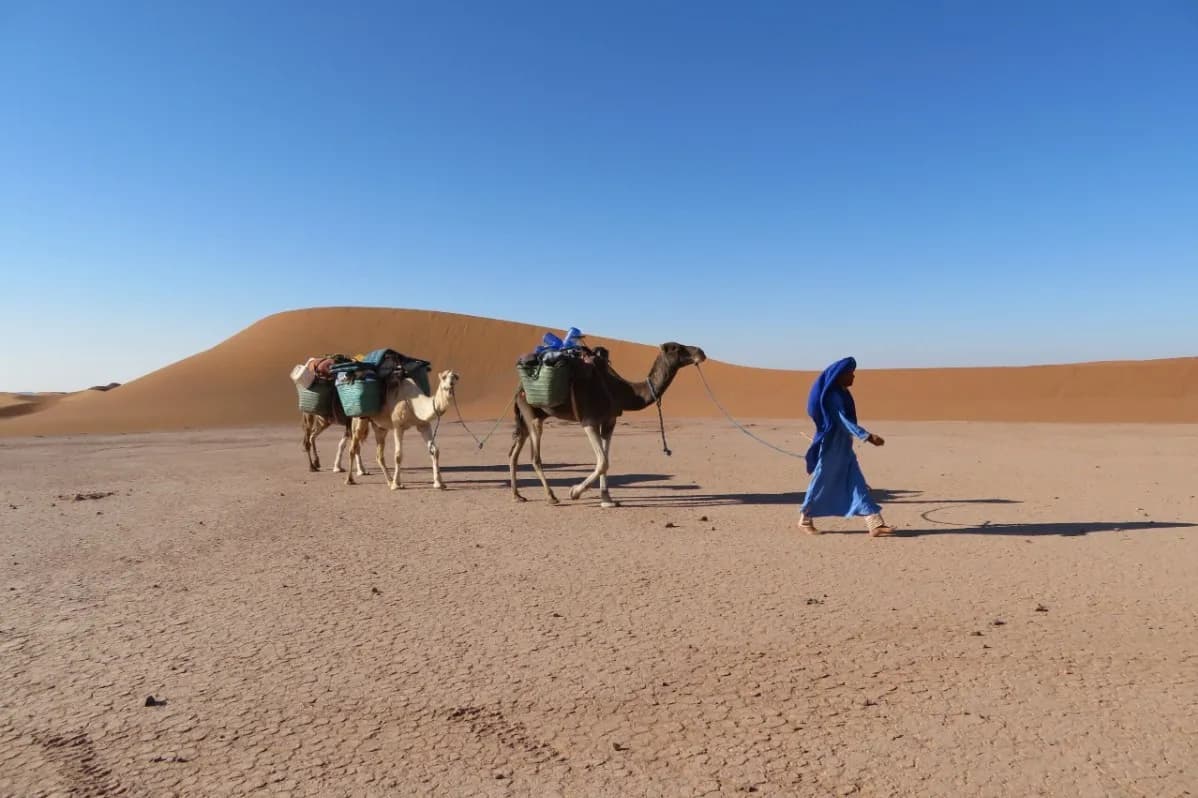
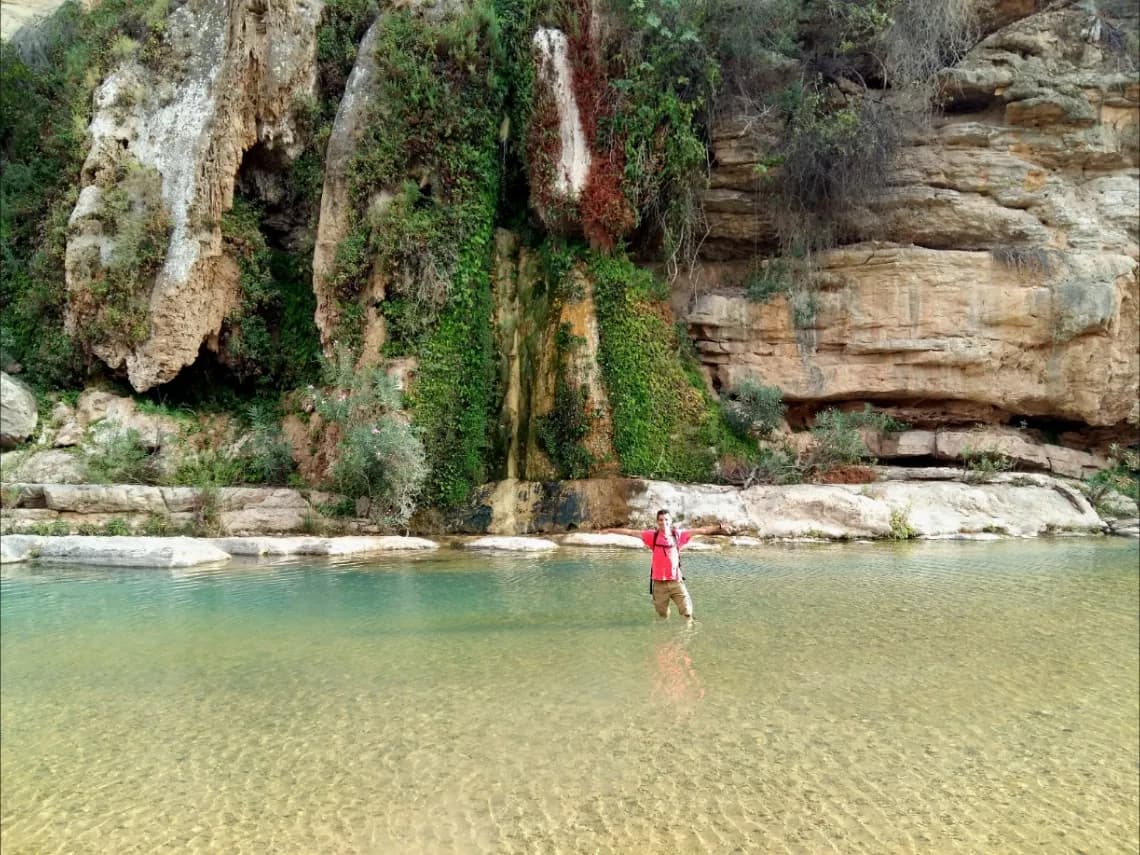
February is one of the best months for walking in southern Morocco. In the Anti-Atlas, the almond trees blossom around Tafraout, usually from February into early March, when the Ameln Valley and its pink-stone villages are at their most colourful. In the Sahara, days are mild, nights are cool but bearable, and the dunes are still quiet.
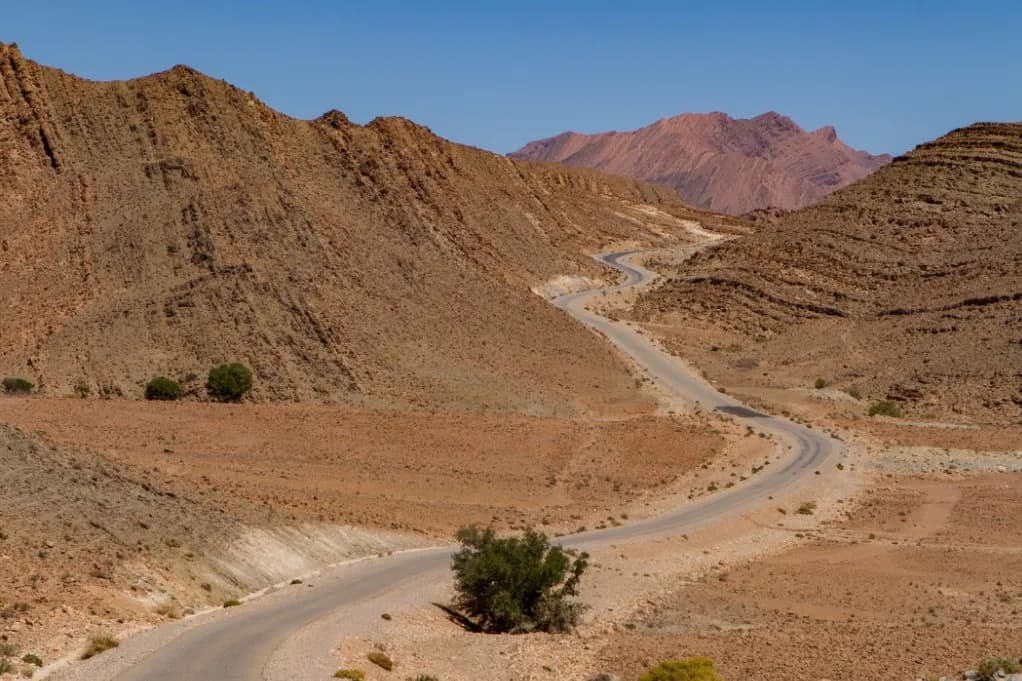
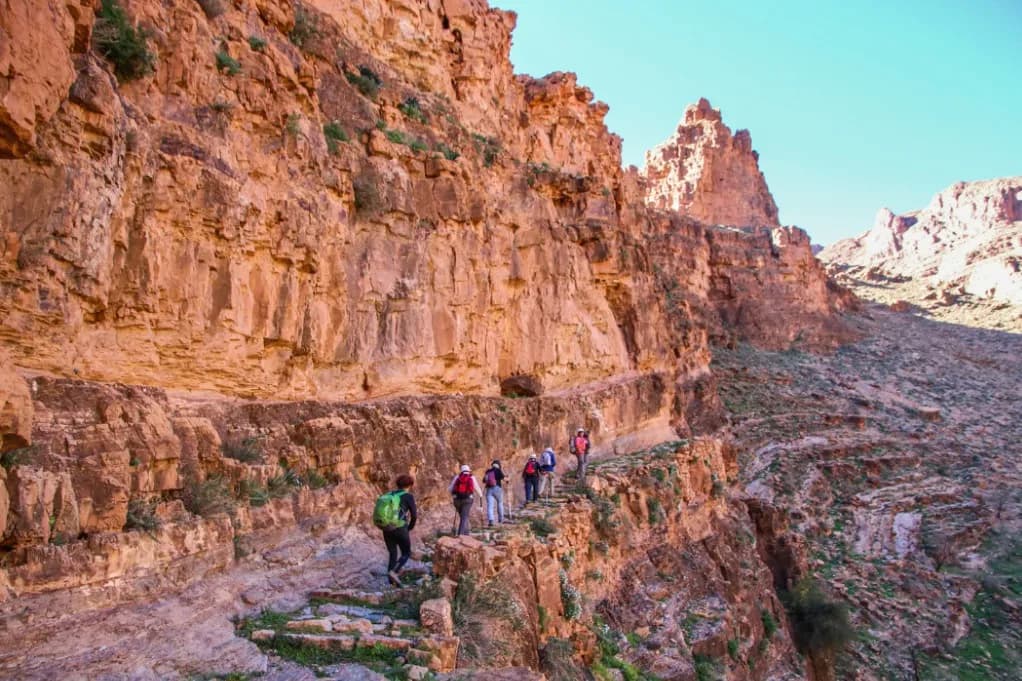
The High Atlas, meanwhile, is in the depths of winter: February is often the snowiest month, and the M'Goun is closed to trekkers. Toubkal in February is a guided winter ascent, not a trek. For a first trek in Morocco in February, the Anti-Atlas is the safest choice: moderate altitude, dry trails and stages from village to village.
Days are longer than in January, but desert nights are still cold, so check with the agency what bedding it provides. For a milder desert and greener landscapes, March is the other good option. Nothing fits your dates? Tell us about your trip and a local agency will reply directly.
Asked before every February departure.
When do the almond trees blossom in Tafraout?
Blossom usually starts in February and can last into early March, depending on the winter and the altitude. The exact timing changes from year to year, so if the almond blossom is your priority, ask the agency how it is progressing before fixing your dates. The treks around Tafraout and the Ameln Valley pass through the almond-growing areas.
Can you combine the Anti-Atlas and the desert in February?
Yes, both regions are in good condition in February, but they are far apart: allow a long day's drive between Tafraout and the dunes of M'Hamid or Merzouga. Some agencies run treks in both regions and can link them, so describe your trip and they will suggest an itinerary.
Does Ramadan affect a trek?
Ramadan moves about eleven days earlier each year and partly falls in February in the next few years. Treks still run: guides and muleteers fast during the day, but trekkers' meals are usually served as normal. The pace may be adjusted slightly, so check that year's dates and talk to the agency.
Explore another way
Neighbouring months
Themes
Going further